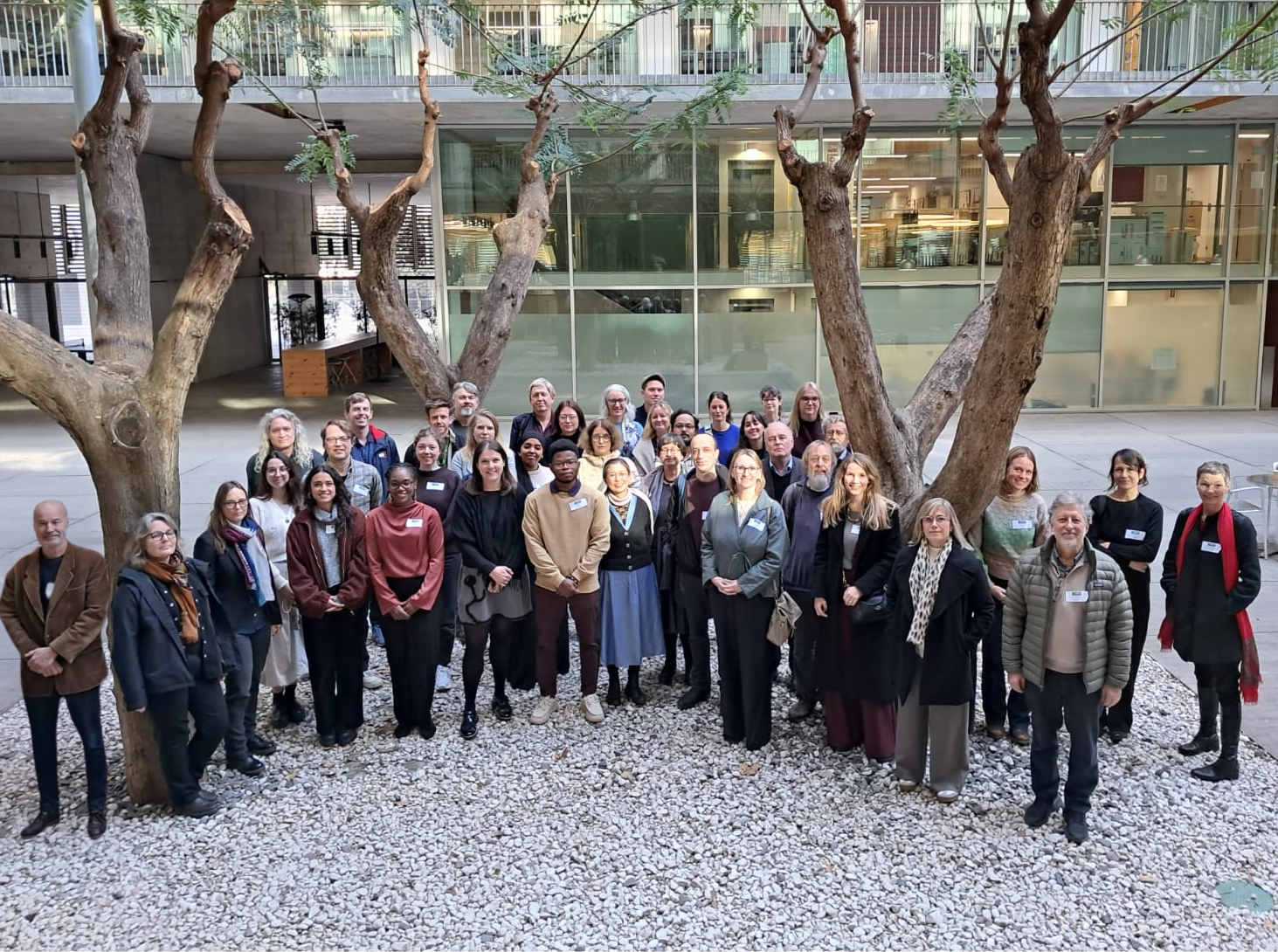
The ISGlobal Spring School has concluded with outstanding success, bringing together 1,397 registered participants. One of the six courses, the course titled “Climate Change, Sustainable Work Practices, and Green Jobs: Research Methods in Occupational Health,” was led by the INTERCAMBIO project and attracted an international audience with 535 participants.
Designed as an introductory programme, the course was aimed at researchers and practitioners in public health, epidemiology, occupational health and safety, as well as policymakers. Throughout the week, participants were introduced to key occupational epidemiological research methods applied in the field. Topics included a range of epidemiological study designs, occupational exposure assessment, and the development of co-created intervention studies in priority industries using participatory approaches that actively involve workers and employers. The course also examined current debates and helped define future global research priorities in occupational health.
By the end of the programme, participants were able to explain core concepts linking climate change and work-related health outcomes, discuss methodological approaches, and recognise emerging needs in global occupational health research.
The course drew on insights and research from the EU-funded INTERCAMBIO project while maintaining a broad global perspective. Feedback from attendees was very positive, with 97.8% indicating they would definitely recommend the course, reflecting both the relevance of the content and the quality of the teaching.
Many thanks to all students and faculty for contributing to such a successful and inspiring week!
You can find more information about the course here: ISGlobal Spring School
The Spring School has been supported by the ISGlobal Severo Ochoa Centre of Excellence Programme
(grant CEX2023-001290-S funded by MCIN/AEI/10.13039/501100011033)